Water Heater Leaking at the Top or Bottom? Find the Source Before Choosing a Fix
Water can travel down the outside of a heater. The puddle location alone does not identify the failed part; the source and safety conditions come first.
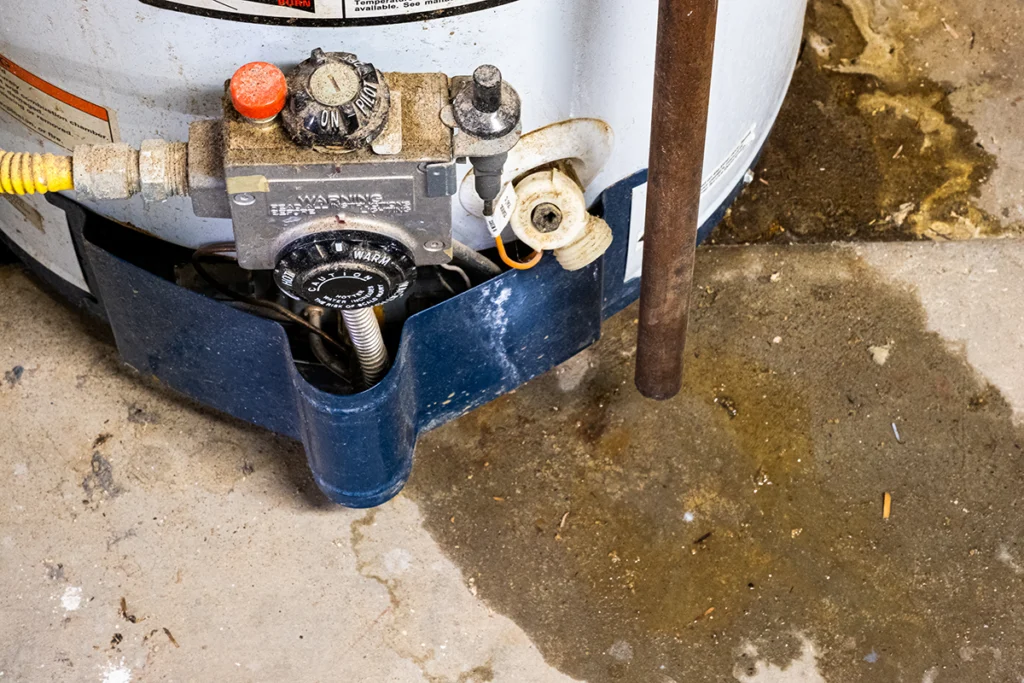
Water near a water heater needs attention, whether it appears at the top, beneath the tank or at the end of a discharge pipe. The first question is where the water originates, not which part to replace.
Is a Leaking Water Heater Dangerous?
An active leak can damage the building and create a hazard around electrical equipment. Hot discharge can scald. A small drip is not proof of immediate tank failure, but it should not be ignored or treated as harmless without assessment.
Stay away from water touching electrical equipment. For suspected gas leakage, smoke, fire or a carbon-monoxide alarm, leave the area and call emergency services from a safe location. Do not operate switches or attempt to relight equipment in a suspected gas leak. The CPSC carbon-monoxide guidance explains why an alarm requires an immediate response.
If the area is safe, describe the leak when you call and follow the exact heater’s shutdown directions only when you can identify and safely reach its controls. A wet electrical panel, stuck valve or unfamiliar gas control is a reason to stop and get help, not improvise.
Why a Water Heater Leaks From the Top
Water at the upper connections can run down the jacket and look like a bottom leak. A technician checks the cold inlet and hot outlet connections, their fittings and any accessible ports. A drip at a connection may require repairing that connection; it does not automatically mean replacing the tank.
Depending on the model, a relief valve or its discharge arrangement may also be near the upper part of the heater. Nearby piping and condensation must be distinguished from a heater leak. Do not remove an anode or tighten a pressurized fitting to test a guess. Bradford White’s installation guidance addresses water connections and relief protection for its covered models; the manual for your heater controls the details.
Why Water Appears at the Bottom
A leaking drain valve or its connection can leave water at the base. Water originating higher up, including relief discharge, can reach the same location. A corroded storage tank can also leak internally. The technician traces the source before choosing a repair.
Condensation can resemble a leak under some operating conditions. It is a possibility to investigate, not a reason to dismiss persistent water. Record when it appears, whether the heater was operating and whether the wet area is growing. Take a photo from a safe position; do not touch hot piping or remove access covers.
A Leaking Pressure-Relief Valve Needs Its Own Diagnosis
The temperature-and-pressure relief valve is a safety device, not a tap to turn off. Never cap, plug or obstruct the valve or its discharge pipe. Do not remove it or repeatedly lift its lever while troubleshooting a hot, leaking heater.
Discharge may reflect excessive temperature or pressure, thermal expansion in a closed water system, or a valve problem. Bradford White explains thermal-expansion discharge: heating water in a system that cannot accommodate its expansion can cause pressure to rise. Simply replacing a dripping valve may not correct the underlying installation problem.
A professional checks the actual water pressure, temperature, expansion control and valve condition against the heater instructions. Confirmed valve failure calls for the correctly rated replacement; an expansion or control problem calls for its own correction. Seeing a drip does not establish which repair is needed.
Repair or Replace the Heater?
An accessible connection or drain-valve problem may be repairable. A leaking storage tank generally needs replacement rather than a patch. Have the diagnosis, heater age, condition and repair price explained before deciding.
Ask what failed, how the technician confirmed it, whether the repair addresses the cause and what the replacement option includes. A new pan does not repair a tank, and a relief-valve change does not by itself prove pressure is controlled.
Maintenance Without Guessing
Use the model’s maintenance schedule for flushing, anode assessment and safety-device checks. Do not apply a universal valve-testing interval or drain a hot tank without the proper preparation. Tell the technician about recurring discharge, rust, changing hot-water performance or water around the unit.
Clog Heroes offers water heater repair and installation. Calls are answered 24/7 at (540) 518-2564. After-hours attendance depends on availability; after-hours and emergency dispatch is $189, never credited back. The work is priced in writing before it begins.
Water Pooling Under the Tank?
A Clog Heroes technician finds the source, tells you whether to repair or replace and gives you a written price before any work starts. Calls are answered 24/7 at (540) 518-2564.
Filed under Water Heaters · All Guides
More Water Heaters Guides
Can You Install a Water Heater Without a Drain Pan?
A working heater does not prove the installation can omit a pan. Check the equipment instructions and the requirements for the specific job.
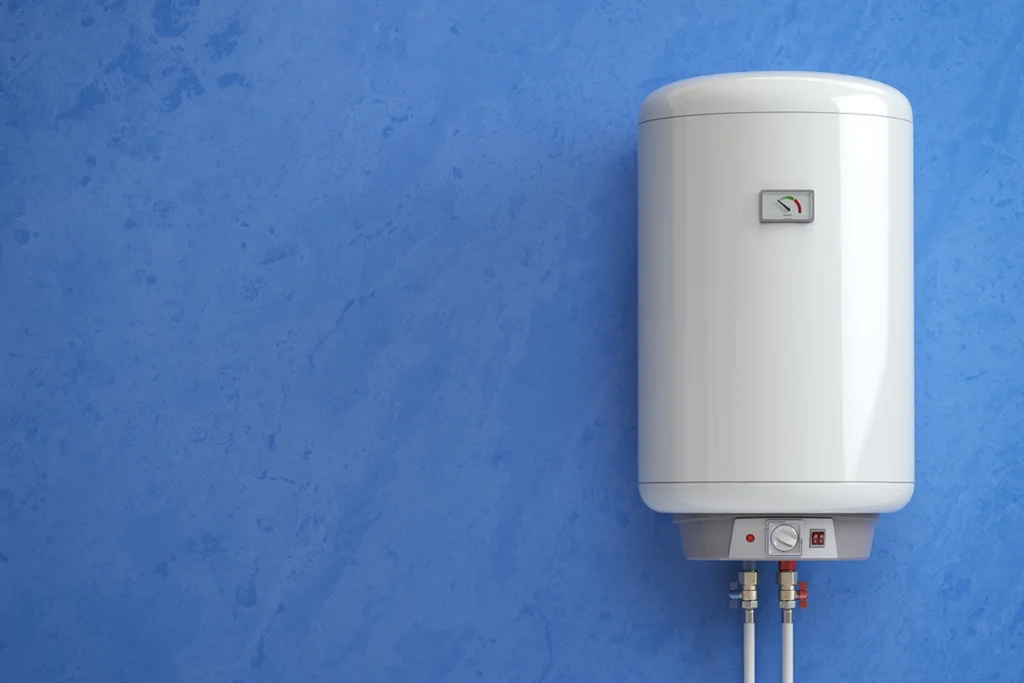
Heat Pump Water Heater vs. Tankless: Compare Demand, Space and Total Cost
These technologies solve different installation problems. Compare rated hot-water delivery and the complete job, not just a claimed efficiency or endless-water promise.
How to Shut Off and Drain a Water Heater: Model-Specific Steps and Safety Limits
Identify the heater and the reason for stopping it first. Shutdown, draining and restart are separate tasks; use the exact model instructions.